
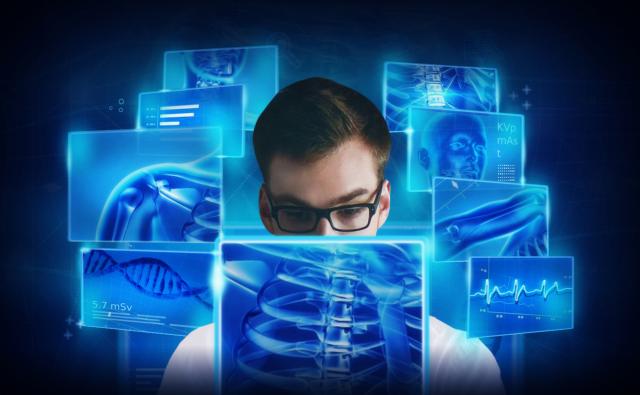
There are few things in our lives as interesting as your body. Its complex structure and fascinating facts are truly awe inspiring.
Your body is like an intricate machine, full of mysteries and wonders waiting to be explored. From mind-boggling abilities to bizarre quirks, it’s time to unravel some of the most astonishing facts about the human body.
At a Glance

- The Abuser of Energy – Brain Drain
- Our Strongest Muscle – The Masseter
- The Superheroes of Vision – Our Eyes
- The Magical Touch – Fingerprint Patterns
- Our Hidden Powerhouse – Mitochondria
- The Healing Touch – Our Regenerative Abilities
- The Towering Structure – Our Skeletal System
- Our Unseen Heroes – Gut Microbiota
- The Musical Mind – The Brain and Music
- The Multitasking Marvel – Our Skin
- Our Brain's Mind-Blowing Processing Power
- Our Unbreakable Enamel
The Abuser of Energy – Brain Drain
Did you know that the human brain, weighing in at just around 3 pounds, is the most energy-consuming organ in our bodies? It gobbles up approximately 20% of the body’s total energy, even though it only makes up about 2% of our body weight.

Our brains also generate enough electrical impulses to power a light bulb. Not sure how you would go about that but please don’t try. The average brain produces around 20 watts of electrical power, lighting up our thoughts and actions. And it generates trillions of electrical impulses every second!
Our Strongest Muscle – The Masseter

You might not be aware, but your body contains over 600 muscles. From the powerful glutes to the intricate muscles controlling your eye movements. These remarkable fibers work tirelessly to keep you moving and grooving!
When you think about the strongest muscles in your body, biceps or quadriceps might come to mind. But you’d be wrong. The strongest muscle in proportion to its size is the masseter muscle, responsible for chewing our food. It exerts an incredible force of up to 200 pounds on the molars.
So next time you’re tearing through your steak, take a moment to appreciate the might of your masseter muscle!
The Superheroes of Vision – Our Eyes

Our eyes are nothing short of superheroes, constantly working to provide us with the beautiful gift of sight. Did you know that our eyes can distinguish around 10 million different colors?
That’s right! From the vibrant hues of a rainbow to the subtle shades of a sunset, our eyes enable us to experience the world in all its glorious colors.
The Magical Touch – Fingerprint Patterns

No two people in the world have the same set of fingerprints. Isn’t that astonishing? Even identical twins, who share the same DNA, have distinct fingerprint patterns.
These intricate ridges on our fingertips are formed during fetal development and remain the same throughout our lives, making them a foolproof way to identify individuals.
So you could say that you’re holding a one-of-a-kind masterpiece on each finger!
Our Hidden Powerhouse – Mitochondria

Inside our cells, there’s an army of tiny powerhouses called mitochondria. These microscopic structures, adorably called organelles, are responsible for producing energy.
What’s astonishing is that these tiny things generate approximately 90% of the energy our bodies need to function!
But what makes them even more remarkable is the fact that they have their own DNA, separate from our cellular DNA. This fascinating trait has led scientists to theorize that mitochondria were once independent organisms that formed a symbiotic relationship with our ancestors, eventually becoming an integral part of our cells.
The Healing Touch – Our Regenerative Abilities

While our bodies may not possess the ability to regenerate entire limbs like certain animals, we still have some impressive regenerative powers. For instance, your liver has the remarkable ability to regenerate itself from just 25% of its original mass.
Moreover, the outer layer of our skin continually renews itself, shedding approximately 30,000 to 40,000 dead skin cells every minute. From mending broken bones to fighting off infections, our bodies possess an innate ability to bounce back and keep us in the game of life.
The Towering Structure – Our Skeletal System

Our skeletal system serves as the foundation for your body, giving you the ability to stand tall and move around. But get this. Babies are born with around 300 bones, but as they grow, some bones fuse together. By the time we reach adulthood, we end up with just 206 bones!
And did you know that the human thigh bone, also known as the femur, is the strongest and longest bone in your body? It’s so strong that it can support up to 30 times your body weight. That’s like carrying a small car on your leg!
And while bones may seem brittle, they’re actually stronger than steel! In fact, bone is four times stronger than concrete. It’s an impressive feat considering it’s lighter than both steel and concrete.
Our Unseen Heroes – Gut Microbiota

In the depths of our digestive system, around 100 trillion microbes silently perform their essential tasks. These microscopic heroes, collectively known as gut microbiota, help break down food, produce essential vitamins, and boost our immune system.
So keep these little guys happy. They play a vital role in maintaining your overall health and well-being!
And the enteric nervous system, often called the “gut brain,” consists of around 500 million neurons that line your digestive tract. This complex network helps regulate digestion and communicates with your central nervous system.
The Musical Mind – The Brain and Music

Have you ever wondered why music has such a profound impact on your emotions? Well, it turns out that our brains are hardwired to respond to music in extraordinary ways.
When we listen to music, various areas of our brain light up, including those associated with pleasure, memory, and emotional processing. Music has the power to evoke strong emotions, trigger memories, and even improve our cognitive abilities!
It’s no wonder that music is often considered the universal language of the soul.
The Multitasking Marvel – Our Skin

Our skin, the largest organ of our body, is truly a multitasking marvel. It protects our internal organs. It acts as a barrier against harmful substances. It regulates body temperature. It plays a role in vitamin D synthesis. Told you.
Additionally, our skin is equipped with an intricate network of nerves, allowing us to feel the world through touch. It’s a remarkable organ that deserves our utmost care and appreciation.
Oh and another one of our fun facts about the human body: If you were to spread out all the skin you have, it would cover an area of about 20 square feet (1.86 square meters). That’s one large but disturbing cloak. And every square inch of your cloak contains about 30 million bacteria. Don’t worry, though—most of them are harmless!
Our Brain’s Mind-Blowing Processing Power

Your brain is a true marvel. Incredibly, it’s estimated to have approximately 100 billion neurons, each connected to thousands of others.
This intricate network allows your brain to process an astounding amount of information. In fact, it’s believed that the human brain can hold up to 2.5 petabytes of data. To put that into perspective, it’s equivalent to three million hours of television shows!
And remarkably our brains are capable of processing up to 30 billion bits of information per second and it hosts around 6,000 miles of wiring and cabling. That’s New York to LA and back with change!
Our Unbreakable Enamel

Our teeth are designed to withstand incredible forces. See massater muscle above.
And enamel, the outermost layer of our teeth, is the hardest substance in our bodies. It’s even stronger than bone! Which therefore makes it stronger than steel and concrete.
The Incredible Blinking Marathon

Blinking is an automatic process we rarely think about. But did you know that you blink approximately 20,000 times per day? That’s a lot of blinking!
All this fluttering isn’t for nothing. It keep our eyes lubricated and protected ready to experience the beautiful world around us.
The Digestive System: A Complex Journey

Ever wondered how our bodies break down food? No me neither.
First, saliva helps break down food before it travels down the esophagus and into the acid pit known as the stomach. Did you know that this acid has a PH between 1 and 2 and is only slightly less acidic than battery acid?! This means it is strong enough to dissolve razor blades!
Thankfully, our stomach lining protects us from the harmful effects of this acid. But it can’t stop heartburn. This is when acid travels up towards your throat causing that burning sensation in our chests we are all familiar with, even if we didn’t know what it was!
And have you ever wondered how much food your digestive system processes in a lifetime? Around 50 tons of food. That’s the weight of about six elephants!
The Cardiovascular System: A Pumping Marvel

Let’s talk about the heart, the driving force behind our circulatory system.
It beats around 100,000 times a day, pumping your blood through an extensive network of blood vessels that, if laid end to end, would stretch over 60,000 miles. That’s more than twice the circumference of the Earth!
Not only this but did you know that your heart can pump approximately 2,000 gallons of blood every single day? That’s enough to fill more than 35 bathtubs every day and means our hearts pump an Olympic size pool of blood every year!
The Power of Taste and Smell

Prepare to be amazed by our taste buds and olfactory system. Did you know that humans have five basic tastes? Sweet, sour, salty, bitter, and umami (savory).
But recent research suggests that we might have a sixth taste called “oleogustus,” which is the ability to taste fat. Yum!
And this has to be one of the most amazing facts about the human body – believe it or not, your sense of smell is so incredibly powerful that it can detect over one trillion different scents!
Yes, you read that right – a trillion, a 1 followed by 9 zeros. Although I wouldn’t count on smelling them all, and neither would you want to!
Our Immune System’s Defense Mechanism

Our immune system is a true superhero, tirelessly defending us against countless pathogens every day. In fact it can recognize and remember more than a billion different pathogens!
Within this complex defense network, white blood cells called neutrophils are the first responders to any infection. These tiny warriors can travel through blood vessels, squeeze through capillary walls, and even chase down bacteria to protect us from harm.
Our Lightning-Fast Reflexes

When it comes to reflexes, our bodies are lightning-fast.
The signal from your toe to your brain and back travels at an incredible speed of around 150 miles per hour.
And within your spine, signals can travel up and down at around 270mph, around the same speed as the fastest passenger train in the world!
Our Essential DNA

Deep within the nucleus of our cells lies the complex blueprint of life, our DNA.
Here’s another one of these mind-blowing facts about the human body: if you were to stretch out the DNA molecules in your body, they would reach the sun and back more than 600 times.
That’s only around 100 billion miles of genetic material!
Our Extraordinary Ears

Ear’s a fact that will leave you in awe: the smallest muscle in the human body, the stapedius muscle is found in the ear and is only about 0.05 inches (1.3 mm) long!
Imagine something smaller than a flea playing such a crucial role in your hearing!
And have you ever wondered why Pops has such large ears? It’s because they’ve never stopped growing! But I wouldn’t bet on him picking up extra-terrestrial signals anytime soon as those dish’s ability to hear dwindles dramatically with age. Poor Pops.
Our Phenomenal Lungs

Our lungs are vital for supplying oxygen to our bodies, and they have some astonishing features.
Did you know that the surface area of the lungs exceeds 50 square meters, about the same area as a 1 bed apartment, yet they barely weigh a kilogram?
And the airways contained within them stretch around 1,500 miles which is basically the length of the entire East Coast!
Wrap it Up
In conclusion, the human body is a remarkable marvel filled with fascinating facts. From the incredible power of the brain to the tireless work of the heart, our bodies are a symphony of efficiency and complexity.
As we’ve explored these mind-blowing facts about the human body, we’ve gained a deeper appreciation for the incredible vessel that carries us through life. So, let’s raise a toast to our extraordinary bodies! They’re not only our partners in crime but also our greatest asset on life’s thrilling journey.
By understanding our bodies, we can unlock the key to a healthier, happier, and more fulfilling life. So, let’s give our bodies the care and respect they deserve and embark on an adventure of well-being and vitality together.
After all, your body is no ordinary entity; it’s an exceptional masterpiece in its own right. Cheers to that!


+ There are no comments
Add yours